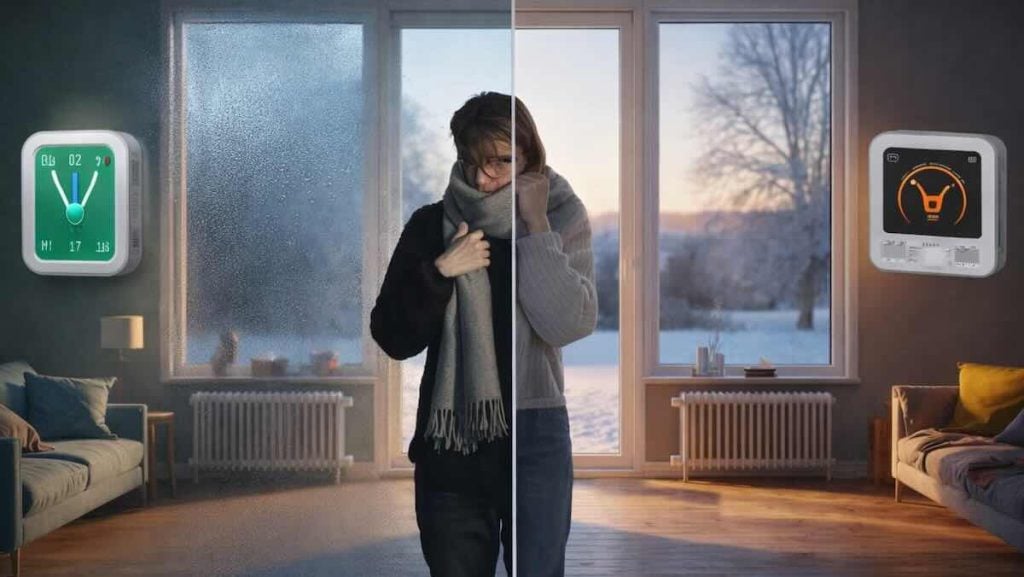
From city flats in London to family homes in Berlin and small houses in rural France, the same habit repeats every winter morning. The door closes, the thermostat is twisted down to the lowest setting, and people leave feeling smart and responsible. It feels logical. Why heat an empty home?
With energy prices still fresh in everyone’s memory, this ritual has become almost automatic. It gives a sense of control in a time when utility bills can feel unpredictable. The idea is simple. If no one is there, no heat is needed.
Yet heating engineers and building specialists keep repeating the same warning. That “obvious” saving often does the opposite. Instead of lowering costs, it can make homes harder to warm, less comfortable in the evening, and more demanding on the heating system itself.
The big mistake: turning everything down too far
When cold weather arrives, energy anxiety arrives with it. People begin to monitor every degree. Before leaving for work, they push the temperature down dramatically. Before a weekend away, they switch the heating off entirely.
On paper it looks efficient. In reality, the building starts to behave very differently once the temperature drops too much.
A home is not just air that needs to be warmed. It is a complete structure that stores heat in its walls, floors, ceilings, and furniture. Sofas, carpets, and even the kitchen worktop hold warmth during the day and release it slowly.
When you allow the temperature to fall too far, all that stored heat disappears. The house becomes cold from the inside out. When you return and turn the heating back on, you are no longer warming the air. You are reheating the entire building.
That process demands a huge burst of energy. The boiler, heat pump, or electric radiators run at full power for a long period just to rebuild the warmth that was lost. In many cases, that intense reheating cancels out the small saving made while the home was empty.
Why experts favour small drops, not brutal cuts
Heating professionals now promote a much more balanced strategy. Instead of switching everything off, they recommend lowering the temperature slightly.
If your home is comfortable at 20°C while you are there, reducing it to around 17 or 18°C during the day keeps energy use under control without letting the structure go cold.
This small adjustment has several advantages.
The home cools slowly, which reduces heat loss through walls and windows. The internal surfaces remain mildly warm, so the system does not need to start from zero in the evening. Reheating becomes faster and more efficient. At the same time, the heating system avoids long periods of maximum output, which reduces wear and tear.
There is also a comfort benefit. When you walk back into a home that has only cooled slightly, it does not feel damp or icy. The warmth returns quickly and evenly.
What really happens when your home gets too cold
The idea that turning the heating off always saves money ignores how buildings physically respond to temperature changes.
Once the interior drops too low, several hidden effects begin to work against you.
1. Heavy structures act like ice blocks
Materials such as brick, concrete, and stone have a high thermal mass. They are excellent at storing heat, but they are just as effective at storing cold.
If they are allowed to cool completely, they behave like large cold reservoirs. When the heating is switched back on, much of the energy goes into warming those materials first. The air temperature may rise quickly, but the room still feels cold because the surrounding surfaces are absorbing the heat.
This is why a house that has been left unheated for a full day often feels uncomfortable for hours, even after the thermostat is turned up.
2. Moisture and condensation increase
Very low indoor temperatures create the perfect conditions for condensation. When warm air returns in the evening and meets cold walls and windows, moisture forms.
Over time this can lead to damp patches, musty smells, and in some cases mould. Preventing the temperature from dropping too far helps keep indoor humidity under control and protects the building itself.
3. Heating systems work under greater stress
A heating system is most efficient when it runs steadily. Sudden demands for rapid reheating force it to operate at maximum capacity for long periods.
This not only increases energy consumption in short bursts but can also shorten the lifespan of the equipment. Boilers cycle more aggressively, heat pumps lose efficiency, and electric systems draw more power at peak times.
The comfort factor people underestimate
Energy saving is important, but comfort plays a major role in daily life. Walking into a home that has dropped to 12 or 13°C does not just feel cold. It changes the entire evening routine.
People often respond by turning the thermostat higher than usual in an attempt to warm the space faster. This reaction leads to even higher energy use and uneven heating.
A home that stays within a stable temperature range feels warmer, even if the actual number on the thermostat is lower.
The smarter way to manage heating when you are out
Modern thermostats and smart heating systems make it easier than ever to follow the expert approach.
Instead of switching everything off, program a small daytime reduction and schedule the temperature to rise shortly before you return home. This keeps the building warm enough to avoid energy spikes while still reducing overall consumption.
Curtains, good insulation, and sealing drafts also play a crucial role. The less heat your home loses during the day, the less energy is needed in the evening.
Why the “all or nothing” mindset is so common
Part of the problem is psychological. Turning the heating off completely feels like a strong, decisive action. It gives the impression of maximum saving.
A small adjustment, by contrast, feels less dramatic even though it is often more effective. People naturally prefer clear, simple rules, and “off equals saving” is easier to understand than the more subtle reality of thermal balance.
A stable home is a cheaper home
The key message from heating specialists is not about using more energy. It is about using it more intelligently.
Keeping your home within a moderate temperature range allows the structure to retain warmth, reduces stress on the system, limits moisture problems, and creates a more comfortable living environment.
In the long run, stability is what saves money. A house that never becomes completely cold is easier and cheaper to heat than one that must be warmed from scratch every evening.